
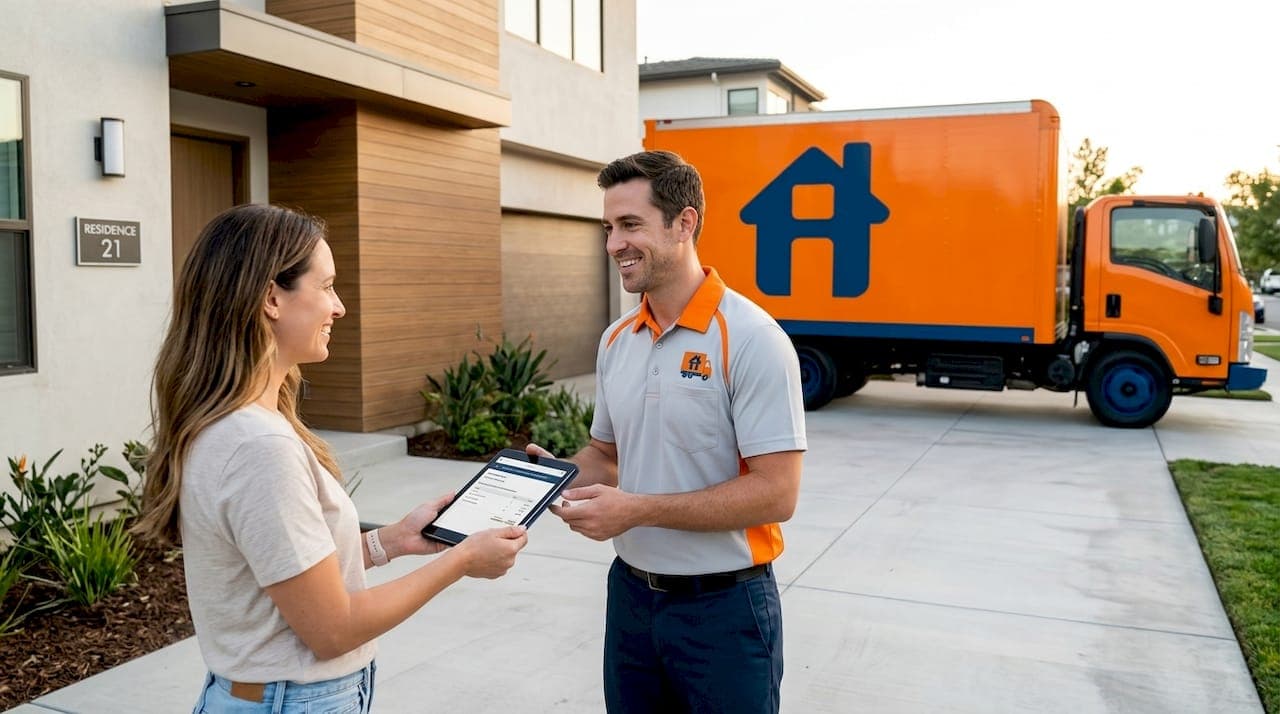
Most people assume clearing out junk means hauling everything to a landfill. That assumption costs communities dearly. The role of donation in responsible junk disposal is far more significant than most families realize. When you donate instead of dump, you extend the life of usable goods, support local charities, and actively reduce the environmental burden on your city. This article walks you through the environmental impact of donating your unwanted items, the tax benefits you may be leaving on the table, and the practical steps that make the whole process work.
Table of Contents
- Key takeaways
- How donation helps reduce landfill waste and supports local charities
- Tax benefits and financial considerations of donating junk
- Practical steps to maximize donation impact and responsible disposal
- Choosing the right donation and junk removal service
- My honest take on donation and responsible disposal
- How Bookjunkaway makes responsible disposal easy
- FAQ
Key takeaways
| Point | Details |
|---|---|
| Donation diverts serious waste | Well-run services divert 65–85% of items from landfills through donation and recycling. |
| Item condition determines acceptance | Charities reject damaged or contaminated items, so cleaning and sorting before donation matters. |
| Tax deductions require documentation | IRS rules for noncash contributions are specific; receipts and proper valuation are non-negotiable. |
| Preparation prevents rejection | Separating donatable from non-donatable junk before pickup dramatically increases diversion rates. |
| Professional services handle the sorting | Junk removal companies that prioritize donation take the guesswork out of responsible disposal. |
How donation helps reduce landfill waste and supports local charities
The average American household generates a surprising volume of usable goods during a cleanout. Furniture, clothing, small appliances, kitchenware, and tools often get tossed simply because the owner does not know what else to do with them. That is a missed opportunity on every level.
When items are donated instead of discarded, they reduce landfill waste while supplying resources to nonprofits, shelters, and families who genuinely need them. A couch that feels worn to you may be the first real furniture a family in transitional housing has ever owned. A bag of clothes you no longer wear can outfit a child heading back to school. The impact is tangible and local.
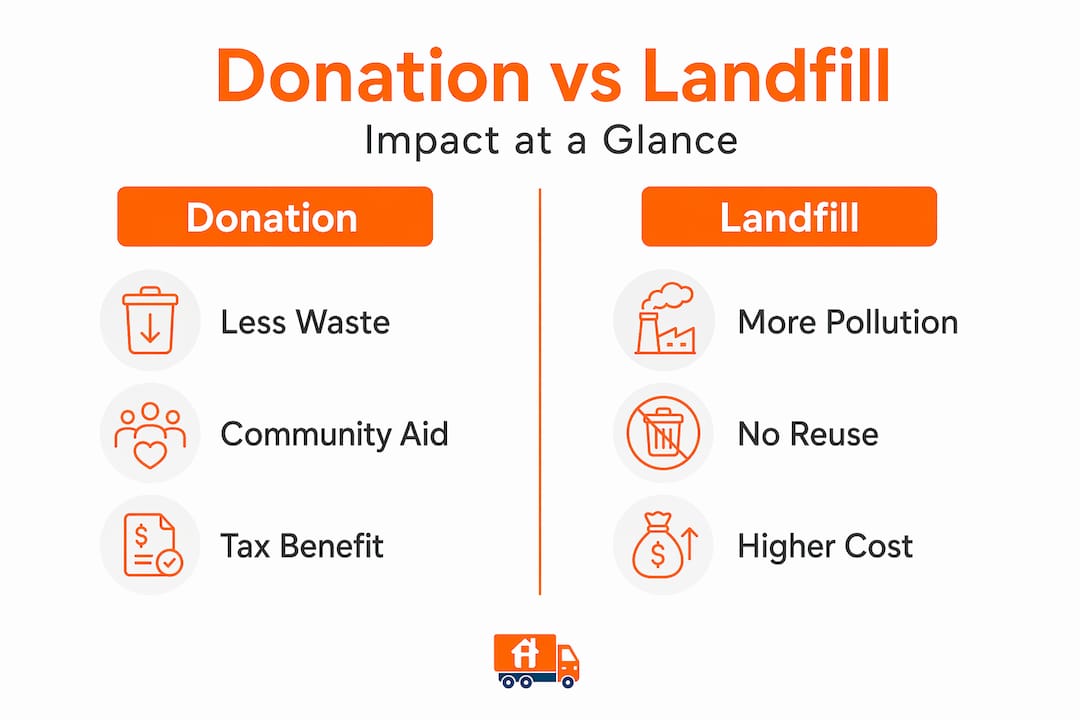
From a purely environmental standpoint, the numbers are compelling. Professional junk removal services that prioritize eco-friendly donations divert 65–85% of collected items from landfills through donation and recycling combined. That far exceeds what most curbside recycling programs achieve. Landfills are not just eyesores. They generate methane, leach toxins into groundwater, and consume land that communities cannot reclaim.
The most commonly donated items that charities actually want include:
- Furniture in clean, undamaged condition (sofas, tables, dressers, bed frames)
- Clothing and shoes that are washed and free of tears
- Small kitchen appliances that still function (toasters, blenders, coffee makers)
- Books, toys, and games in usable shape
- Tools and sporting goods without significant wear
The contrast with landfill disposal is stark. Throwing a working blender into a dumpster means it sits in a landfill for decades. Donating it means someone uses it tomorrow. Recycling is better than landfilling, but it still requires energy to process materials. Donation skips that step entirely by keeping the item in its current, useful form.
Pro Tip: Before you call for a pickup, wipe down furniture, wash clothing, and test appliances. Charities inspect every load. Items that arrive clean and functional get accepted. Items that arrive dirty or broken get rejected and often end up in the landfill anyway, which defeats the entire purpose.
Tax benefits and financial considerations of donating junk
Here is where many people either miss out entirely or make costly mistakes. Donating your junk to a qualifying nonprofit organization can generate a real tax deduction, but the IRS rules are specific and unforgiving of sloppy documentation.
The IRS addresses noncash charitable contributions through Publications 526 and 561, which outline how to value donated goods and what records you need to keep. The core requirements are:
- Items must be donated to a qualified tax-exempt organization (verify status at IRS.gov)
- You must obtain a written receipt from the organization for any donation
- Items must be in good used condition or better to qualify for a deduction
- Donations valued above $500 require IRS Form 8283 attached to your return
- Donations valued above $5,000 generally require a qualified written appraisal
The valuation piece trips people up most often. You cannot simply claim what you paid for something years ago. The IRS requires you to use fair market value, which is what a willing buyer would pay a willing seller in the current market. Thrift store pricing guides and online resale platforms can help you establish reasonable values.
"Errors in claiming deductions are common due to misunderstanding IRS requirements for donated items' condition and value." The safest approach is to document everything at the time of donation, not weeks later when details fade.
Tax policy shapes donation behavior in ways most people never consider. The UK, for example, introduced VAT relief for business donations to reduce waste by encouraging companies to give goods to charities rather than destroy them. The underlying logic is the same everywhere: when you remove financial friction from donating, more items get donated and fewer end up as waste.
Pro Tip: If you are donating a significant load of furniture or appliances, photograph every item before it leaves your home and keep the dated receipt from the charity. That paper trail is your protection if the IRS ever questions your deduction.
Practical steps to maximize donation impact and responsible disposal
Knowing donation is good is one thing. Executing it well is another. Most people underestimate how much preparation separates a successful donation from a rejected load that ends up in the landfill anyway.
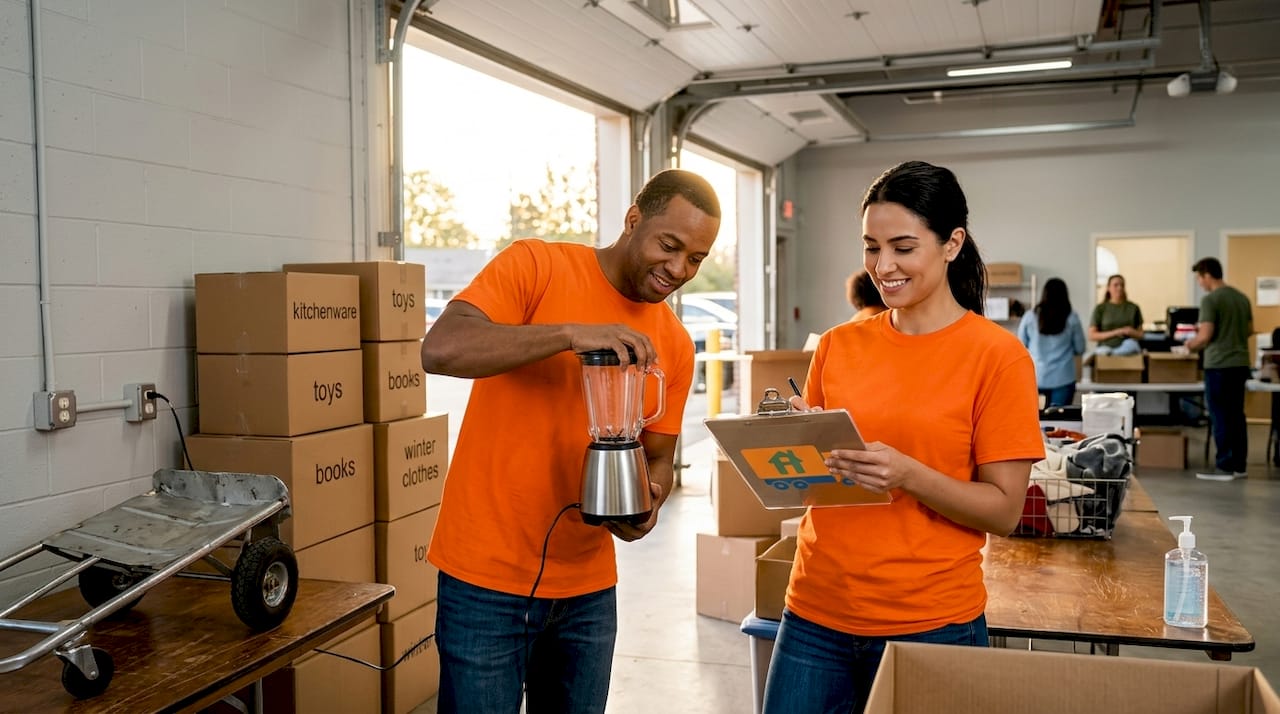
Contaminated or mixed loads are among the most common reasons charities turn items away. When donatable and non-donatable items are mixed together without sorting, the entire load can be refused. That means your good intentions produce exactly the outcome you were trying to avoid.
Here is a practical framework for getting it right:
- Research first. Call or check the website of your target charity before loading anything. Acceptance criteria vary widely. Some organizations take large furniture; others do not have the storage or transport capacity.
- Clean and repair. Furniture must be cleaned, undamaged, and free of odors to be accepted. A quick wipe-down and odor treatment can be the difference between acceptance and rejection.
- Sort ruthlessly. Create three piles: donate, recycle, and dispose. Do not let them mix during transport.
- Use reputable services. Donation pickup services and junk removal companies that prioritize responsible disposal will sort on your behalf, but starting with a cleaner load always produces better outcomes.
For items that genuinely cannot be donated, responsible disposal still beats the landfill in most cases. Here is how the three main options compare:
| Disposal method | Environmental impact | Community benefit | Cost to you |
|---|---|---|---|
| Donation | Lowest: extends item life, no processing needed | High: directly supports charities and families | Low or none |
| Recycling | Medium: requires energy to process materials | Indirect: reduces raw material extraction | Low |
| Landfill disposal | Highest: permanent waste, methane, toxins | None | Varies |
The table makes the hierarchy clear. Donation wins on every meaningful measure when items are in acceptable condition. Recycling is the right call for materials that cannot be reused as-is. Landfill disposal should genuinely be the last resort, not the default.
Pro Tip: Electronics deserve special attention. Most charities do not accept them, but certified e-waste recyclers do. Never put electronics in the regular trash. Many contain heavy metals that contaminate soil and water.
Choosing the right donation and junk removal service
Not all junk removal companies approach donation the same way. Some genuinely prioritize it. Others give it lip service while sending the bulk of loads straight to the landfill. Knowing how to tell the difference protects both your items and your intentions.
The best services operate with a clear sorting protocol. Professional services prioritize environmentally responsible disposal by donating the majority of usable items and recycling the rest, treating landfill as a last option rather than a convenience. When you call a service, ask directly: "What percentage of what you collect gets donated or recycled?" A company that cannot answer that question clearly is probably not doing it well.
Here is what to look for and communicate when booking a junk removal service with donation in mind:
- Ask whether the company has established relationships with local charities or nonprofits
- Confirm they will sort your load on-site rather than treating everything as trash
- Tell them upfront which items you want prioritized for donation
- Ask if they provide documentation for tax purposes when items are donated
- Confirm they are licensed and insured, which protects you if anything goes wrong during pickup
Same-day pickup services add a practical advantage beyond convenience. When you can schedule removal quickly, you are less likely to let items sit and deteriorate to the point where they no longer qualify for donation. A sofa left outside for two weeks in Florida humidity is a very different item than one picked up the day after you call.
The collaboration between junk removal companies and local charities is what makes landfill diversion rates of 65–85% achievable. No single household can replicate that network on its own. Partnering with a service that has those relationships already in place multiplies your impact without adding work on your end.
My honest take on donation and responsible disposal
I have seen hundreds of junk removal jobs, and the pattern I keep encountering is this: people genuinely want to do the right thing, but they underestimate how much the details matter. They assume that putting something in a donation pile automatically keeps it out of the landfill. It does not. If that item arrives at a charity in poor condition, it gets rejected. And rejected items almost always end up exactly where you did not want them.
What I have learned is that the environmental impact of donations is real and significant, but only when the execution matches the intention. The families and shelters that benefit from donated goods are not getting your junk. They are getting items that someone took the time to clean, sort, and present properly. That distinction matters.
On the tax side, I have watched people leave real money on the table because they did not keep a receipt or could not document the value of what they gave. The IRS rules are not designed to be punishing. They just require you to treat a donation like a financial transaction, which it is.
My honest advice: stop thinking of donation as a way to "get rid of" things. Think of it as transferring value to someone who needs it. That mindset shift changes how you prepare items, which changes outcomes, which changes the actual impact on your community and your landfill.
— Charles
How Bookjunkaway makes responsible disposal easy
If you are in the Tampa Bay area and want to clear junk without the guilt of sending usable items to a landfill, Bookjunkaway is built for exactly that. The team prioritizes donation and recycling on every job, working with local charities to make sure usable items reach people who need them rather than a dumpster.
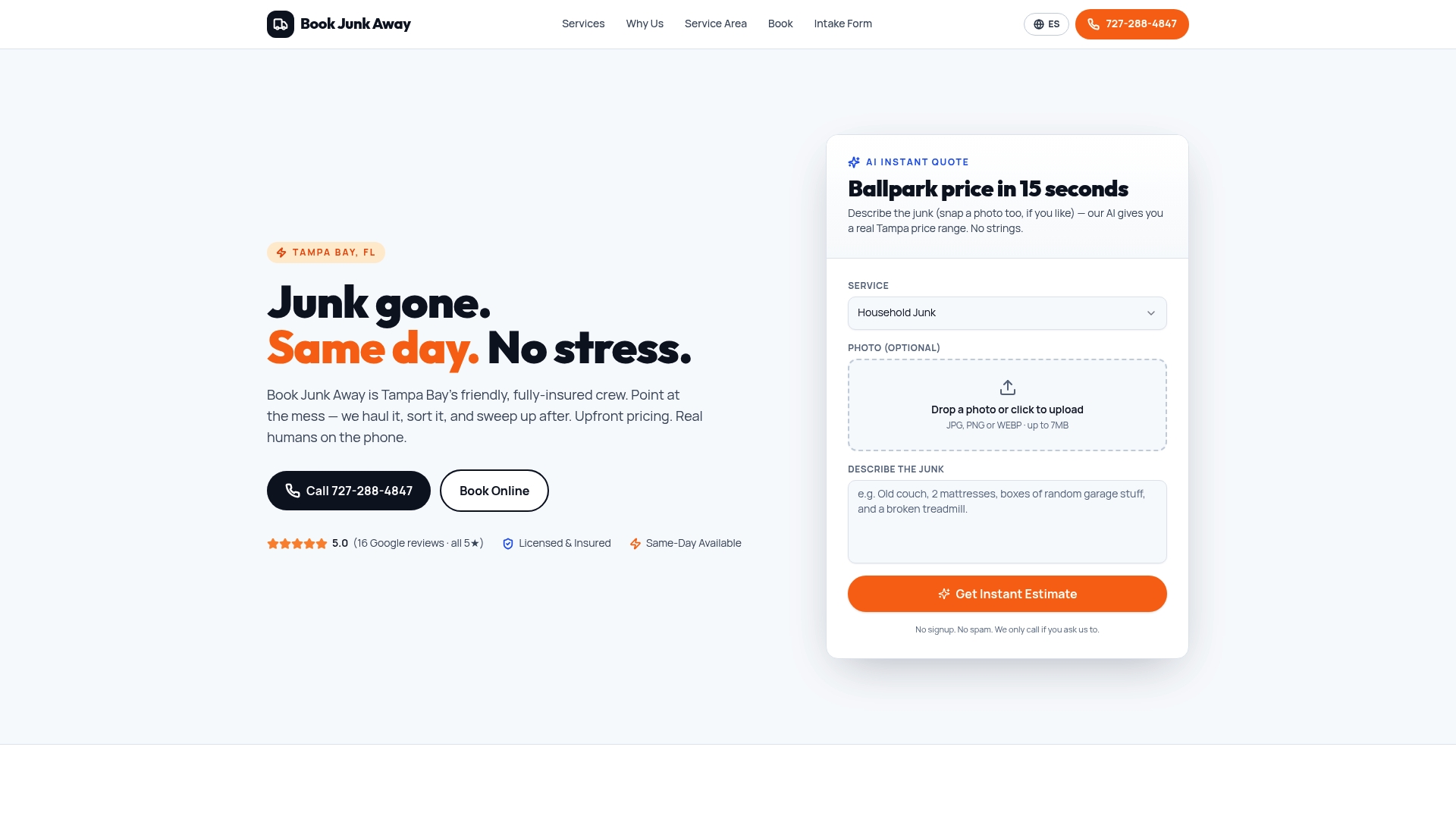
Bookjunkaway offers same-day junk removal across Tampa Bay with upfront pricing and an AI-driven instant quote. You describe or photograph your items, get a real price immediately, and schedule pickup at your convenience. The crew sorts on-site, separating donatable items from recyclables and only sending to landfill what genuinely has no other option. Whether you are in Tampa, Riverview, or Largo, the process is the same: fast, transparent, and genuinely eco-friendly. Book your pickup today and turn your cleanout into something your community actually benefits from.
FAQ
What is the role of donation in responsible junk disposal?
Donation keeps usable items out of landfills by extending their life and transferring them to people or organizations that need them. It is the highest-impact disposal method available for items in good condition, reducing both environmental waste and community need simultaneously.
What items do charities typically accept for donation?
Most charities accept clean, undamaged furniture, functioning appliances, washed clothing, books, and tools. Items that are broken, contaminated, or have strong odors are typically rejected, so preparation before donation is critical.
Can I get a tax deduction for donating junk?
Yes, if you donate to a qualified nonprofit and follow IRS documentation requirements. You will need a written receipt, a fair market value estimate, and Form 8283 for donations exceeding $500 in value.
How do junk removal services help with donation?
Professional junk removal companies that prioritize eco-friendly practices sort loads on-site, directing usable items to charity partners and recyclables to appropriate facilities. This approach achieves landfill diversion rates of 65–85% on collected loads.
What should I do with items that cannot be donated or recycled?
Items that are genuinely unusable should be disposed of through licensed waste haulers rather than illegal dumping. For electronics specifically, certified e-waste recyclers handle materials safely and keep toxic components out of soil and groundwater.