
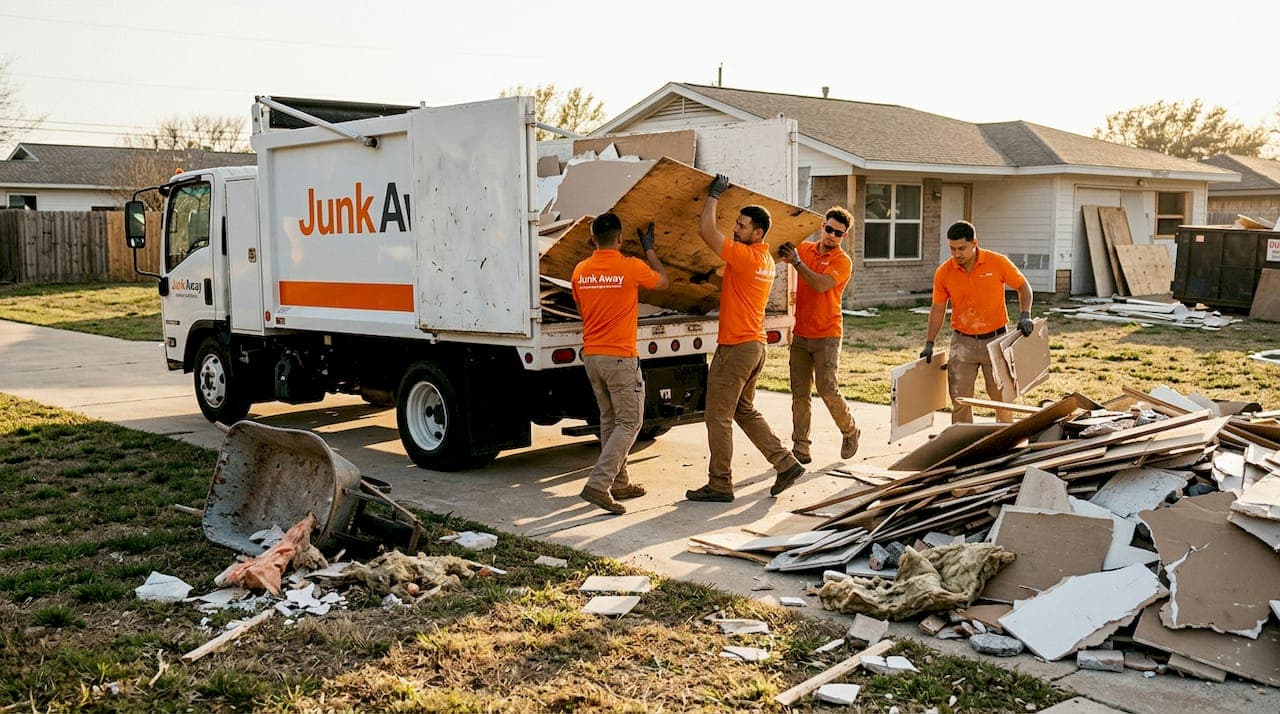
Renovation projects are messy in ways most homeowners don't anticipate. You pull up old flooring, tear out drywall, rip out cabinets, and suddenly you're staring at a pile of debris that won't fit in your trash cans. Understanding how junk removal handles renovation materials makes the difference between a chaotic cleanup and a responsible, cost-effective disposal process. Not every junk removal company treats your debris the same way, and some materials require specific handling that most people never think to ask about.
Table of Contents
- Key takeaways
- What junk removal handles in renovation debris
- How junk removal sorts recyclable materials
- Understanding material recovery facilities
- Eco-friendly and cost-effective strategies
- Questions to ask your junk removal company
- My take on renovation waste disposal
- Ready to clear your renovation debris the right way?
- FAQ
Key takeaways
| Point | Details |
|---|---|
| Not all debris is equal | Junk removal companies accept drywall, lumber, and metals but exclude hazardous materials like paint and asbestos. |
| Sorting drives recycling rates | Source separation before pickup significantly improves how much material gets recycled instead of landfilled. |
| MRFs process your debris | Material recovery facilities use magnets, optical scanners, and manual labor to sort and recycle renovation waste. |
| Hazardous waste needs special handling | Paint, solvents, and asbestos require licensed disposal separate from standard junk removal services. |
| Asking the right questions matters | Confirm diversion rates, recycling practices, and proof of disposal before hiring any junk removal company. |
What junk removal handles in renovation debris
Most homeowners are surprised by how broad the list of accepted renovation materials actually is. Junk removal companies broadly accept drywall, lumber, flooring, metals, and general construction materials in a single pickup. That covers the bulk of what a typical kitchen remodel, bathroom gut, or basement renovation generates.
Here's a breakdown of what typically falls into each category:
- Accepted renovation materials: Drywall and plaster, hardwood and laminate flooring, lumber and framing wood, metal pipes and fixtures, ceramic tiles, insulation (non-asbestos), cardboard and packaging from new materials, old cabinets and countertops
- Materials that require special handling or are excluded: Lead-based paint, asbestos insulation or tiles, chemical solvents and adhesives, fluorescent light bulbs, batteries, and certain electronics
The distinction between construction debris and household junk matters more than most people realize. A bag of old clothes is straightforward. A stack of cement board mixed with broken tile and loose nails is not. Junk removal crews are trained to handle construction debris safely, but they are not licensed hazardous waste handlers.
Pro Tip: Before your crew arrives, walk through your debris pile and pull out anything with a warning label. Paint cans, spray foam canisters, and chemical strippers need to go to your local household hazardous waste facility, not into the junk removal truck.
How junk removal sorts recyclable materials
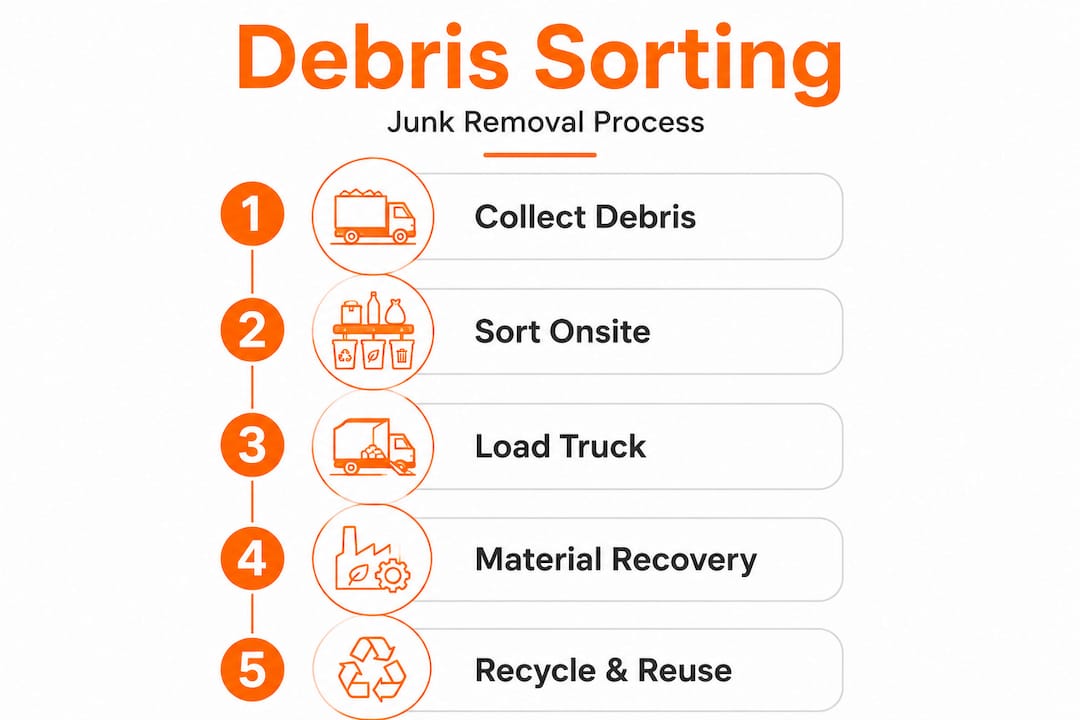
The sorting process is where responsible junk removal companies separate themselves from those who simply haul everything to the nearest landfill. Here is how the process typically works from your curb to the recycling facility:
- Crew assessment on arrival. A trained crew evaluates the debris before loading. They identify materials with obvious recycling value, like metal pipes, clean lumber, and intact fixtures.
- Onsite separation. Metals, wood, and bulky items are often separated at your property before loading. This source separation is the single most effective step in keeping recyclables out of the landfill.
- Loading by material type. Some companies use divided truck compartments or load recyclable materials separately from general waste to prevent contamination.
- Transport to sorting facilities. Loads go to material recovery facilities (MRFs) or directly to specialized recyclers for metals, wood, and concrete.
- Final processing. At the facility, materials are further sorted, cleaned, and prepared for manufacturers or secondary markets.
Junk removal pricing is volume-based, covering labor, loading, and transport in a single visit using trucks with 10 to 15 cubic yards of capacity. That means the crew handling your debris is also responsible for making smart sorting decisions under time pressure.
Pro Tip: Wish-cycling contaminates recycling streams, causing entire loads to be rejected at the facility. If you're unsure whether something is recyclable, set it aside as trash rather than mixing it into the recyclable pile.
Understanding material recovery facilities
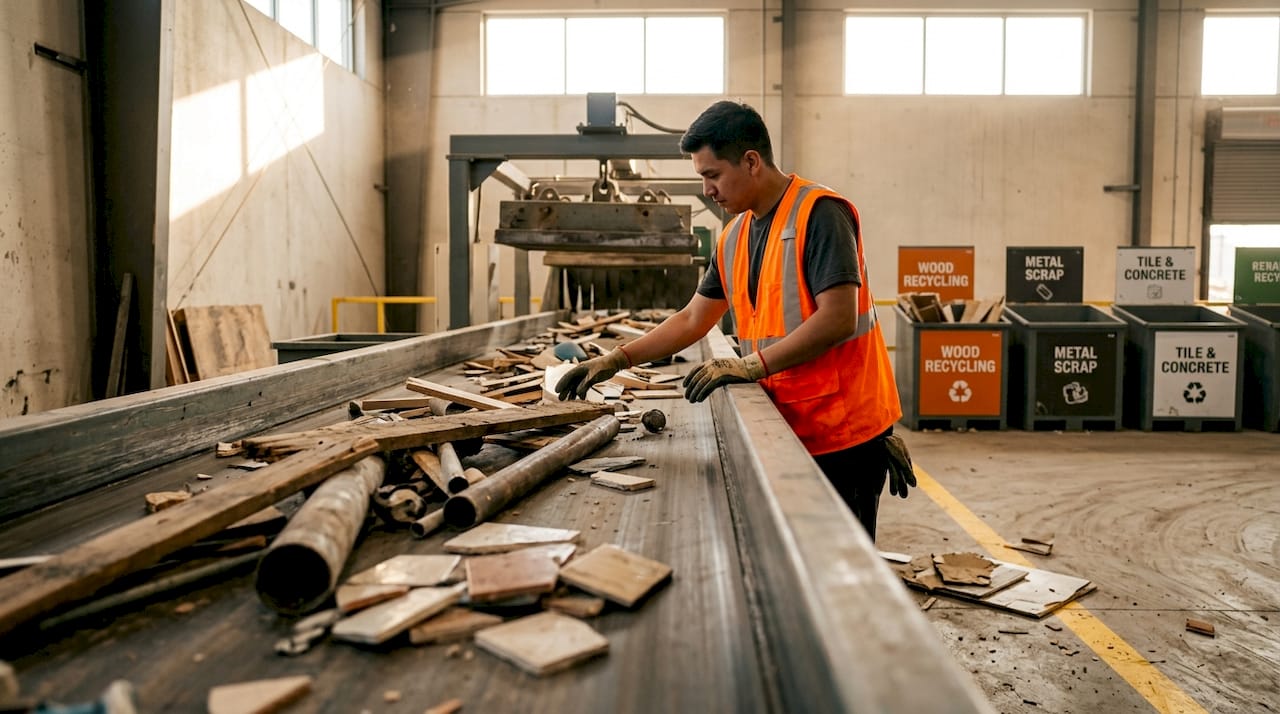
What is material recovery in junk removal? It refers to the process of extracting recyclable and reusable materials from mixed waste loads before anything reaches a landfill. Material recovery facilities, commonly called MRFs, are the physical locations where this happens.
There are two main types of MRFs, and the difference has a direct impact on how much of your renovation debris actually gets recycled.
| Feature | Clean MRF | Dirty MRF |
|---|---|---|
| Input material | Pre-sorted recyclables | Mixed solid waste |
| Recovery rate | Up to 60%+ of materials diverted | Less than 30% recovered |
| Common use | Residential curbside recycling | Mixed construction and municipal waste |
| Renovation debris suitability | Limited for heavy C&D debris | Handles mixed loads but lower recovery |
| Facility prevalence | Majority of US facilities | Only 5% of US MRFs |
MRFs use magnets and optical scanners to separate metals, plastics, glass, paper, and cardboard for recycling, preparing materials for manufacturers. Manual quality control workers catch what the machines miss. The technology is impressive, but it works best on relatively clean, pre-sorted material.
The challenge with renovation debris is that it arrives mixed. Broken tile, insulation scraps, and wood fragments don't flow through standard conveyor systems cleanly. Specialized MRFs handle construction and demolition debris, but standard clean MRFs struggle with heavy construction loads. This is exactly why source separation at your property matters so much. The cleaner the load your junk removal crew picks up, the more of it ends up recycled rather than buried.
Advanced sorting technologies combined with manual labor produce cleaner recycling streams from renovation debris, which is why choosing a junk removal company with MRF relationships gives you a measurable environmental advantage.
Eco-friendly and cost-effective strategies
Planning your renovation debris disposal well before the last day of demo saves you money and reduces your environmental footprint. Here is what actually works:
- Stage your junk removal. Schedule pickups at different phases of the renovation rather than one massive haul at the end. A mid-project pickup keeps your site safer and gives crews cleaner, more sortable loads.
- Separate recyclables before pickup. Pull metals, clean wood, and intact fixtures into their own pile. Source reduction and reuse before disposal remain the most effective environmental strategies, and a sorted pile means more material gets diverted from the landfill.
- Donate usable materials. Cabinets, doors, light fixtures, and flooring in good condition can go to Habitat for Humanity ReStores or local salvage shops. This keeps materials in circulation and may qualify you for a tax deduction.
- Recycle concrete and asphalt separately. Recycling concrete reduces disposal fees and materials costs by turning crushed material into usable aggregate. Some contractors and recyclers will accept it at no charge.
- Choose full-service junk removal for mixed loads. Dumpster rentals make sense for large, single-material loads. For mixed renovation debris with metals, wood, and general waste combined, a full-service crew that sorts on arrival is more efficient and often more eco-friendly.
Pro Tip: Tampa junk removal services that use volume-based pricing reward you for sorting. A smaller, denser load of metal and clean wood often costs less than the same volume of mixed debris because it's faster to process.
Professional junk removal services divert up to 60% of collected renovation debris from landfills through recycling, reuse, and donation programs. That number drops significantly when loads arrive contaminated or unsorted. Your preparation directly affects that outcome.
Questions to ask your junk removal company
Most homeowners hire a junk removal company without asking a single question beyond price. That's a mistake when you care about where your renovation debris actually ends up. Ask these before you book:
- What percentage of renovation debris do you divert from the landfill?
- Do you separate recyclable materials onsite, at a facility, or both?
- Which hazardous materials do you not accept, and how should I dispose of them?
- What does your pricing include, and how do you handle overages?
- Can you provide proof of proper disposal for appliances, electronics, or other regulated items?
A company that answers these questions confidently, with specifics rather than vague reassurances, is one that takes disposal seriously. If they can't tell you where your debris goes, that's your answer.
My take on renovation waste disposal
I've seen homeowners spend weeks planning every detail of a renovation and then completely wing the cleanup. The debris pile becomes an afterthought, and that's where the real environmental and financial cost accumulates.
The most common mistake I see is treating all renovation waste as one category. It isn't. Clean lumber has real value at a recycling facility. Drywall mixed with wet insulation and broken glass has almost none. The five minutes you spend separating materials before the crew arrives can shift a load from 20% recycled to 60% recycled. That's not a small difference.
What I've learned is that the balance between convenience and sustainability isn't actually a trade-off. It's a sequencing problem. If you sort as you demo, rather than after everything is piled up, the work is minimal. Pull metals into one corner, wood into another, and general debris into the main pile as you go. By the time the junk removal crew shows up, the sorting is already done.
The other thing I'd push back on is the assumption that eco-friendly disposal costs more. When you donate usable materials, recycle metals, and reduce your load volume through smart sorting at New Tampa junk removal or anywhere else in the region, you often pay less. Sustainability and cost savings point in the same direction here. You just have to plan for it.
— Charles
Ready to clear your renovation debris the right way?
Bookjunkaway makes renovation debris disposal straightforward for Tampa Bay homeowners and contractors. The crew handles same-day pickups, sorts recyclable materials, and keeps as much debris out of the landfill as possible, all with upfront pricing and no surprise fees.

Whether you're finishing a bathroom remodel in Lutz or clearing out a full gut renovation in Largo, Bookjunkaway brings the same licensed, insured, and eco-conscious approach to every job. Get an instant quote for renovation junk removal by submitting a photo or description of your debris, and a real person will walk you through your options. Check out same-day service in Largo or Lutz junk removal to see how fast and affordable responsible disposal can be.
FAQ
What renovation materials do junk removal companies accept?
Most junk removal companies accept drywall, lumber, flooring, metals, tiles, and general construction debris. Hazardous materials like paint, asbestos, and chemical solvents are excluded and require separate licensed disposal.
How do junk removal companies recycle renovation materials?
Crews separate recyclables like metal and clean wood onsite or at material recovery facilities, where magnets, optical scanners, and manual sorting extract usable materials for manufacturers. Leading services divert up to 60% of renovation debris from landfills.
What is material recovery in junk removal?
Material recovery refers to extracting recyclable or reusable materials from collected debris before landfill disposal. It happens at material recovery facilities (MRFs) using mechanical sorting technology and manual labor.
How should I handle hazardous renovation waste?
Hazardous materials like lead paint, asbestos, solvents, and fluorescent bulbs must go to a licensed household hazardous waste facility. Standard junk removal services are not authorized to transport or dispose of these materials.
Does separating recyclables before pickup actually matter?
Yes. Source separation significantly increases how much material gets recycled rather than landfilled. Mixed, contaminated loads recover far less at sorting facilities, so sorting as you demo is the single most effective step you can take.