
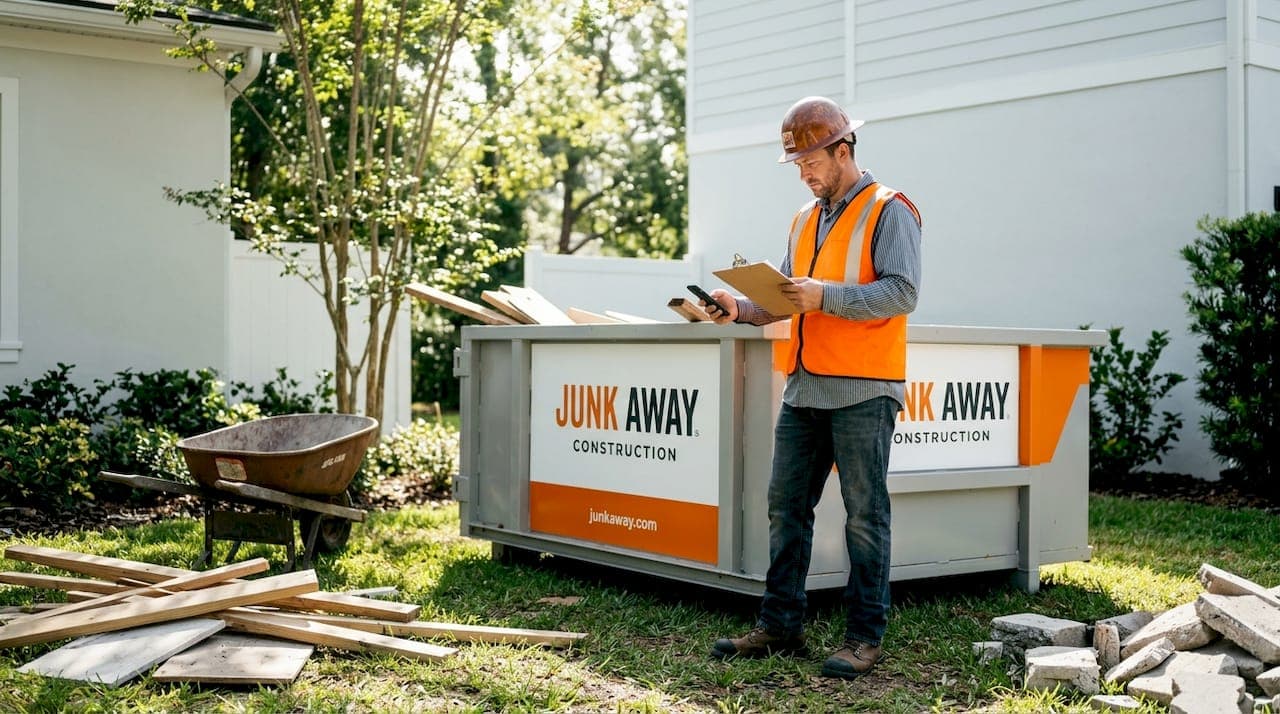
Getting blindsided by a construction waste removal cost estimate you didn't see coming is more common than you'd think. Whether you're finishing a bathroom renovation, clearing a job site, or gutting a commercial space, the debris adds up fast and so do the fees. Removal costs typically range from $300 to $1,000 depending on project size, waste volume, and local disposal fees. This guide breaks down every variable that affects your final number so you can budget accurately, avoid surprise charges, and choose the right service for your situation.
Table of Contents
- Key takeaways
- What affects your construction waste removal cost estimate
- Estimating waste volume and weight accurately
- Comparing service options and pricing models
- Tips to reduce your construction cleanup costs
- How to build a step-by-step cost estimate
- What I've learned from real construction cleanups
- Get a fast, transparent quote from Bookjunkaway
- FAQ
Key takeaways
| Point | Details |
|---|---|
| Costs vary widely | Construction debris disposal pricing runs from $300 to over $1,000 based on volume, weight, and location. |
| Weight is the hidden variable | Heavy materials like concrete and roofing shingles can push you past dumpster weight limits and trigger costly overages. |
| Sorting saves money | Separating recyclables from mixed waste reduces tipping fees and can lower your total removal bill. |
| DIY often costs more | Multiple dump runs, fuel, and time make DIY hauling less economical than most homeowners expect. |
| Get itemized quotes | Always request a detailed estimate that includes weight limits, overage fees, and rental duration terms. |
What affects your construction waste removal cost estimate
No two projects generate the same debris, and no two quotes will look identical. Understanding the variables behind construction waste management costs puts you in control of the budget before the dumpster hits your driveway.
Volume and weight of debris. Most companies price by cubic yard capacity and material weight. A 10-yard dumpster handles roughly the equivalent of three pickup truck loads. Concrete, tile, and roofing shingles are dense materials that hit weight limits fast, even when the container looks half-empty visually.
Type of material. Mixed construction debris costs more to dispose of than sorted loads. Hazardous materials like asbestos, lead paint, or treated lumber require special handling and carry separate disposal fees that can significantly change your renovation waste disposal estimate.
Local landfill and tipping fees. Local disposal fees vary from 15% to 50% of total removal costs depending on your region. Urban markets with stricter environmental regulations tend to charge more at the gate, and those fees get passed directly to you.
Here are the other major cost drivers to account for:
- Site accessibility. Tight driveways, low-hanging wires, or limited truck access add labor time and may require smaller containers with more frequent pickups.
- Hauling distance. The farther your debris travels to a disposal facility, the higher the transportation cost built into your quote.
- Labor for loading. Full-service removal includes workers who load everything. Dumpster rentals put that labor on you.
- Rental duration. Rental periods beyond 7 to 10 days trigger daily extension fees of $5 to $15, which accumulate quickly on longer projects.
Pro Tip: Ask every hauler upfront whether their quote includes delivery, pickup, disposal, and labor separately or as a flat rate. Bundled quotes are easier to compare and harder to inflate with add-ons.
Estimating waste volume and weight accurately
Getting your volume estimate wrong is the most common reason people overpay or underpay on building site waste removal rates. Here's a practical process to get it right.
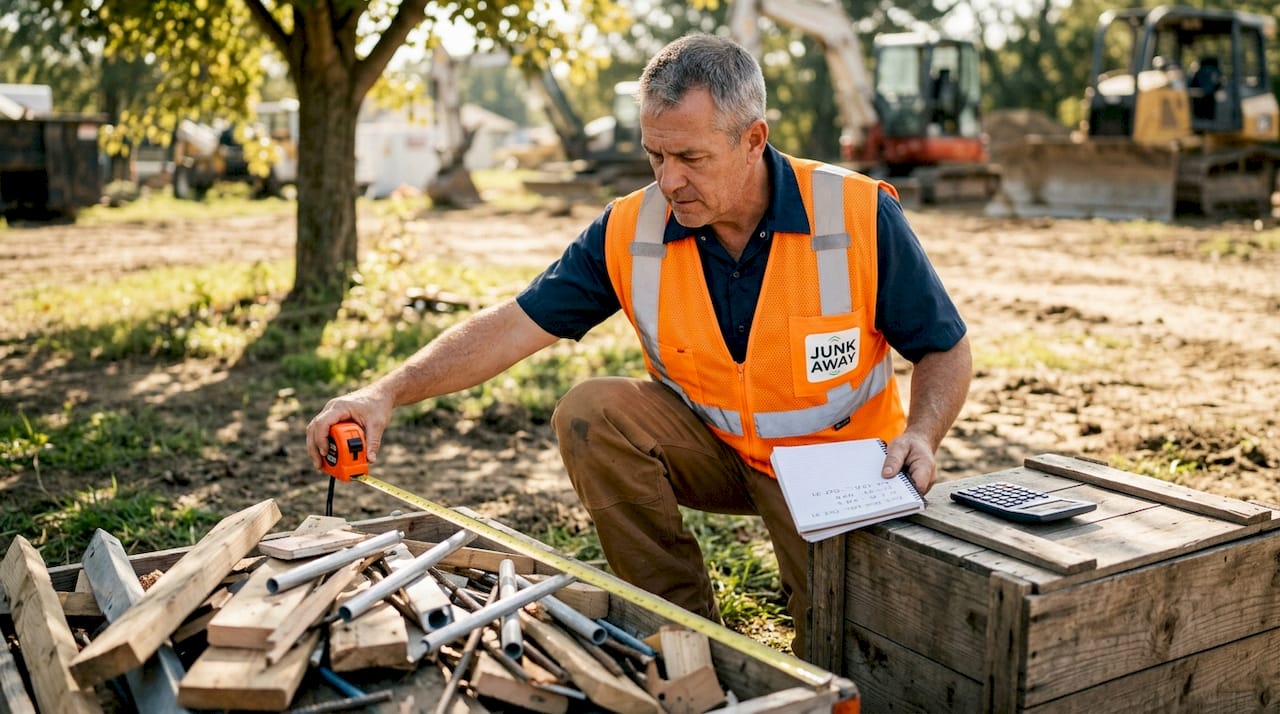
- Measure your debris footprint. Walk the site and estimate the length, width, and height of your debris pile in feet. Multiply those three numbers together and divide by 27 to convert cubic feet to cubic yards. A pile that's 6 feet long, 4 feet wide, and 3 feet tall equals about 2.7 cubic yards.
- Identify your material types. List out what you're removing. Wood framing, drywall, concrete, metal, and roofing each carry different weights per cubic yard. Drywall runs around 500 pounds per cubic yard. Concrete can hit 4,000 pounds per cubic yard.
- Convert volume to estimated weight. Multiply your cubic yard total by the average weight of your primary material. If you're mixing materials, estimate the proportion of each and weight accordingly.
- Factor in recyclables. Separating clean wood, metal, or concrete from mixed waste lowers disposal costs and can sometimes generate a small credit from recycling facilities.
- Add a 15% buffer. Projects almost always produce more debris than the initial walkthrough suggests. Build in margin.
Here's a quick reference for common material weights:
| Material | Approximate weight per cubic yard |
|---|---|
| Drywall | 500 lbs |
| Wood framing | 300 lbs |
| Concrete | 3,500 to 4,000 lbs |
| Roofing shingles | 2,500 to 3,000 lbs |
| Mixed debris | 500 to 800 lbs |
| Metal scraps | 1,000 to 1,500 lbs |
Pro Tip: If your project involves significant concrete or tile removal, rent a container specifically rated for heavy materials. Standard dumpsters have weight limits of 2 to 3 tons, and exceeding those limits triggers overage charges of $50 to $100 per ton.
Comparing service options and pricing models
Knowing the cost of debris removal means understanding which service model fits your project. Each option has a different pricing structure, and the wrong choice can cost you more than you planned.
| Service type | Pricing model | Best for | Watch out for |
|---|---|---|---|
| DIY hauling | Per dump trip plus fuel | Very small loads | Time, vehicle wear, multiple trips |
| Dumpster rental | Flat rate plus weight overage | Medium to large projects | Extension fees, weight limits |
| Full-service junk removal | Volume-based flat rate | Fast turnaround, no loading labor | Higher upfront cost |
| Curbside debris pickup | Per-item or weight-based | Single items or small piles | Limited material types accepted |
The DIY route looks cheap on paper. In practice, DIY removal frequently costs more due to multiple dump trips, fuel, vehicle wear, and labor time. A single dump run in a rented truck can run $150 to $250 once you factor in truck rental, fuel, and the tipping fee at the gate. Do that twice and you've matched the price of a professional pickup.
Full-service junk removal pricing is typically volume-based. You pay for the space your debris occupies in the truck, not a fixed hourly rate. Professional services offer flat rates based on debris space, which makes budgeting predictable. The biggest advantages are speed and zero loading labor on your end.
When comparing quotes, watch for these potential hidden fees:
- Overweight charges when heavy materials exceed the included weight limit
- Prohibited material surcharges for items like mattresses, tires, or hazardous waste
- Fuel surcharges added after the initial quote
- Permit fees if the dumpster sits on a public street
Tips to reduce your construction cleanup costs
Controlling average construction cleanup cost starts before the first piece of debris hits the ground. These practices make a measurable difference.
- Right-size your container. A 10-yard dumpster costs around $200 to $350. A 40-yard container can exceed $800. Renting too large wastes money. Renting too small forces a second pickup. Use your volume estimate to choose accurately.
- Sort as you demo. Keeping concrete separate from wood and metal from drywall reduces mixed-load tipping fees and opens up recycling options. Waste diversion reduces tipping fees and supports sustainability goals.
- Schedule your rental strategically. Know your project timeline before you order. Extending a rental by even three days at $10 per day adds $30 you didn't plan for.
- Verify weight limits in writing. Weight limits are commonly misunderstood and can double rental costs when heavy materials push you over the threshold. Get the limit in pounds, not just tons.
- Check local permit requirements. Placing a dumpster on a public street or sidewalk often requires a permit. Fees range from $25 to $150 depending on your municipality.
Pro Tip: Call your local recycling center before your project starts. Metal, clean concrete, and untreated wood are often accepted for free or at a reduced rate, which can cut your overall disposal bill by 20% or more.
How to build a step-by-step cost estimate
A solid construction waste removal cost estimate doesn't require guesswork. Follow this process and you'll know your number before you call a single hauler.
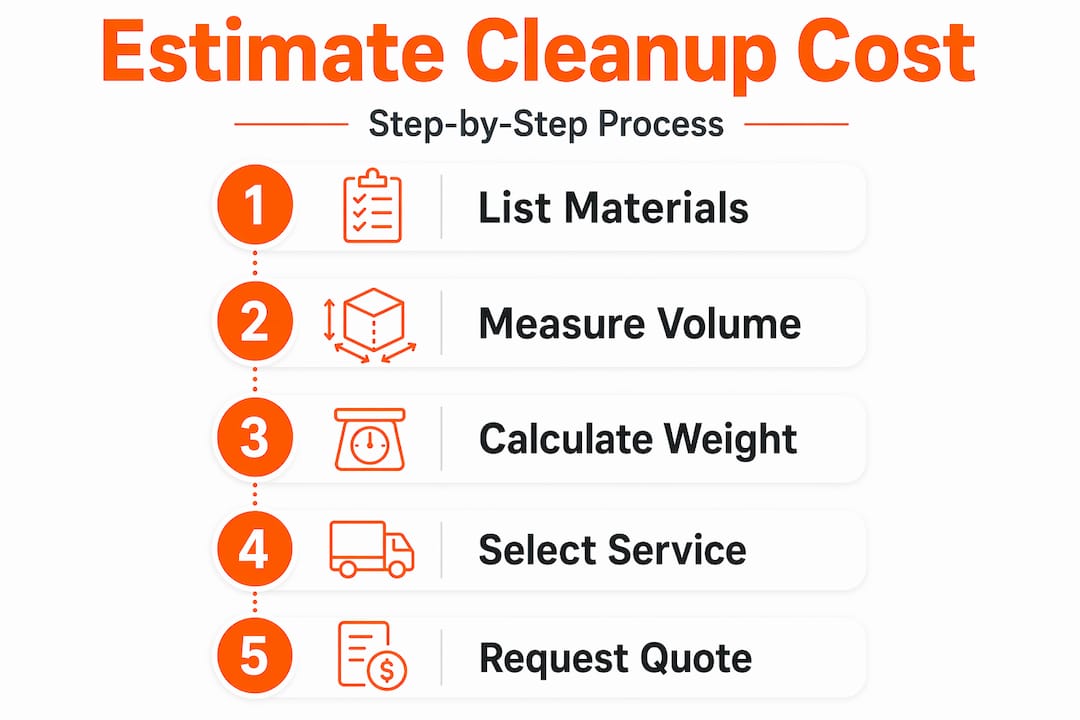
- Assess your project scope. Walk the full site and note every area generating debris. Include demolition waste, packaging materials, and any existing junk being cleared out.
- Estimate volume and material types. Use the cubic yard formula from the section above. Note the proportion of heavy materials versus light debris.
- Research local disposal fees. Call your nearest landfill or check their website for current tipping fees. These vary by material type and are updated regularly.
- Select your service type and container size. Match your volume estimate to the appropriate container or service model. When in doubt, go one size up to avoid a second pickup.
- Request itemized quotes from at least three providers. Ask each one to break out delivery, pickup, disposal, labor, and any potential surcharges separately.
Here's a sample cost breakdown for a mid-size bathroom renovation:
| Cost component | Estimated amount |
|---|---|
| 10-yard dumpster rental (7 days) | $280 |
| Tipping fee (1.5 tons mixed debris) | $120 |
| Permit for street placement | $50 |
| Potential weight overage (0.5 ton) | $75 |
| Total estimated cost | $525 |
- Build in a contingency. Add 15% to 20% to your total estimate to cover unexpected weight overages, additional pickups, or permit requirements you didn't anticipate.
An accurate estimate requires projecting volume and material types alongside local regulations, rental period, and realistic container sizing to avoid costly overruns. Document your estimate and track actual costs as the project progresses so you can adjust future budgets accordingly.
What I've learned from real construction cleanups
I've watched homeowners and contractors make the same mistake repeatedly. They look at a pile of debris, mentally shrink it, and order the smallest container available. Then the concrete comes out of the floor, or the old roofing shingles get stripped, and suddenly they're paying overage fees on top of a second pickup charge.
The weight issue is the one that stings the most. A bathroom floor tile removal that looks like maybe a yard of debris can weigh close to two tons once it's piled up. That's the full weight allowance on many standard dumpster rentals, and you haven't even touched the drywall yet.
My honest take: for anything beyond a single-room cleanout, professional full-service removal is almost always worth the upfront cost. You get a crew, a truck, and a flat price. No second trips, no permit headaches, no weight surprises. The junk removal service pricing looks higher at first glance, but when you factor in your time, a truck rental, and two or three dump runs, the math usually favors the professionals.
The other thing I'd push back on is the idea that sorting is too much extra work. Pulling clean metal and concrete out of your mixed load before pickup takes maybe 30 minutes on a small project and can knock $50 to $100 off your disposal bill. That's real money for minimal effort.
Talk to your hauler before you book. Tell them exactly what materials you have. A good company will flag potential surcharges upfront rather than surprise you on the invoice.
— Charles
Get a fast, transparent quote from Bookjunkaway

If you're in the Tampa Bay area and want a construction waste removal cost estimate without the back-and-forth, Bookjunkaway makes it straightforward. Submit a description or photos of your debris and get an AI-driven instant quote with no hidden fees and no guesswork. The team offers same-day junk removal across Tampa Bay, with volume-based pricing that's clear before anyone shows up. Whether you're clearing a renovation site in Tampa, handling a Largo construction cleanup, or managing debris from a remodel anywhere in the region, Bookjunkaway's licensed and insured crew handles the heavy lifting. Book online in minutes and get your site cleared today.
FAQ
What is the average construction waste removal cost?
Construction debris removal costs typically range from $300 to $1,000 for most residential projects, depending on debris volume, material type, and local disposal fees. Larger commercial jobs or projects with heavy materials like concrete can exceed that range.
How do I estimate how much debris my project will generate?
Measure your debris pile in feet, multiply length by width by height, then divide by 27 to get cubic yards. Add 15% as a buffer, since most projects produce more waste than the initial walkthrough suggests.
Why is my dumpster rental more expensive than the quoted price?
Overweight charges are the most common reason. Weight limits in dumpster rentals are frequently misunderstood, and heavy materials like concrete or shingles can push you past the included tonnage, triggering fees of $50 to $100 per ton over the limit.
Is DIY construction waste hauling worth it?
Rarely. DIY removal often costs more than expected once you account for truck rental, fuel, dump fees, and multiple trips. Professional services frequently cost the same or less when you factor in all the variables.
Can separating recyclables actually lower my disposal costs?
Yes, noticeably. Separating clean wood, metal, and concrete from mixed waste reduces tipping fees and some materials can be dropped at recycling centers for free, cutting your overall removal bill by 20% or more on larger projects.