
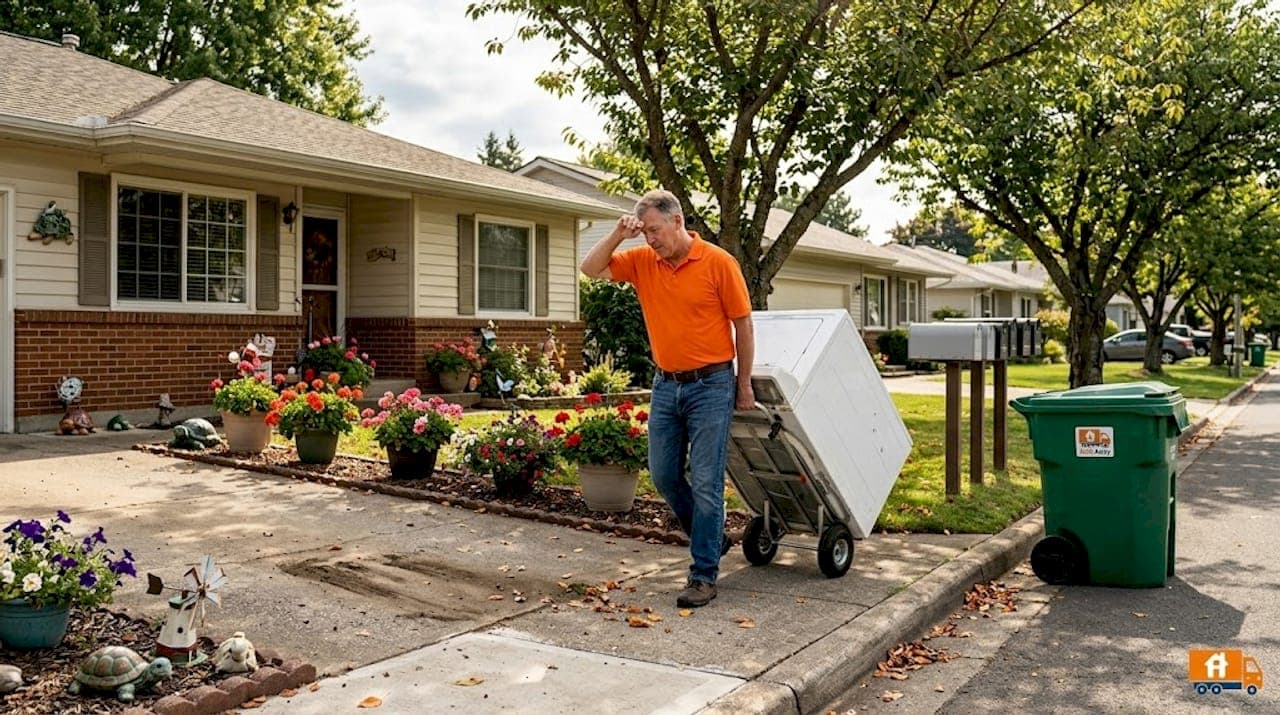
Getting rid of an old appliance sounds simple until you're standing in your kitchen staring at a 300-pound refrigerator with no plan. The appliance removal options homeowners actually have go well beyond dragging something to the curb and hoping for the best. Some methods save you money. Some protect you from fines. And a few can even put cash back in your pocket. This guide breaks down every realistic path, with the honest pros and cons most articles skip over.
Table of Contents
- Key takeaways
- 1. Municipal bulk waste and appliance recycling programs
- 2. Retailer haul-away and trade-in services
- 3. Professional junk removal and home appliance pickup services
- 4. Certified scrap yards and EPA-certified technicians
- 5. Donating working appliances to charities
- 6. Comparing your appliance removal options
- My honest take on appliance removal after years in this space
- How Bookjunkaway makes appliance removal easy in Tampa Bay
- FAQ
Key takeaways
| Point | Details |
|---|---|
| Municipal programs vary widely | Many cities accept appliances curbside, but scheduling and eligibility rules differ by location. |
| Retailer haul-away has strings attached | Most retailers only remove your old appliance when you buy a new one from them. |
| Refrigerants require certified removal | Appliances with refrigerants must be handled by EPA-certified technicians to avoid fines. |
| Professional services offer the most flexibility | Junk removal companies pick up any appliance, any time, without a new purchase requirement. |
| Rebates can offset your costs | Some energy programs pay $50 or more when you recycle qualifying old appliances. |
1. Municipal bulk waste and appliance recycling programs
Your city or county is often the first and cheapest place to start. Many cities offer bulk waste pickup or appliance recycling programs designed to safely remove old appliances, typically accepting refrigerators, freezers, washers, dryers, and other common household units.
The catch is that these programs are not always on demand. Most require you to schedule a pickup days or even weeks in advance, which makes them a poor fit if you're mid-renovation or moving on a deadline. Still, for homeowners with flexible timelines, they're hard to beat on price.
Here's what to expect from most municipal programs:
- Scheduling: Call your city's waste management line or visit their website to book a pickup date.
- Accepted items: Refrigerators, freezers, washers, dryers, dishwashers, and air conditioners are commonly accepted.
- Cost: Often free or low cost, though some cities charge a small fee per item.
- Refrigerant rules: Appliances containing refrigerants, like old fridges and window AC units, may require a separate certified pickup. Improper refrigerant disposal can lead to fines and rejected pickups by municipal programs.
- Preparation: You'll typically need to have the appliance accessible at the curb by a specific time.
Pro Tip: Check whether your local utility company partners with an appliance recycling program. Some energy programs pay $50 or more in rebates for recycling older refrigerators and freezers, which means you get paid to get rid of something that was quietly running up your electricity bill.
2. Retailer haul-away and trade-in services
If you're already buying a new appliance, this option is worth knowing about. Retailers like Home Depot and Lowe's offer haul-away services for your old unit when they deliver the new one. It's convenient because the same crew that drops off your new washer takes the old one away.
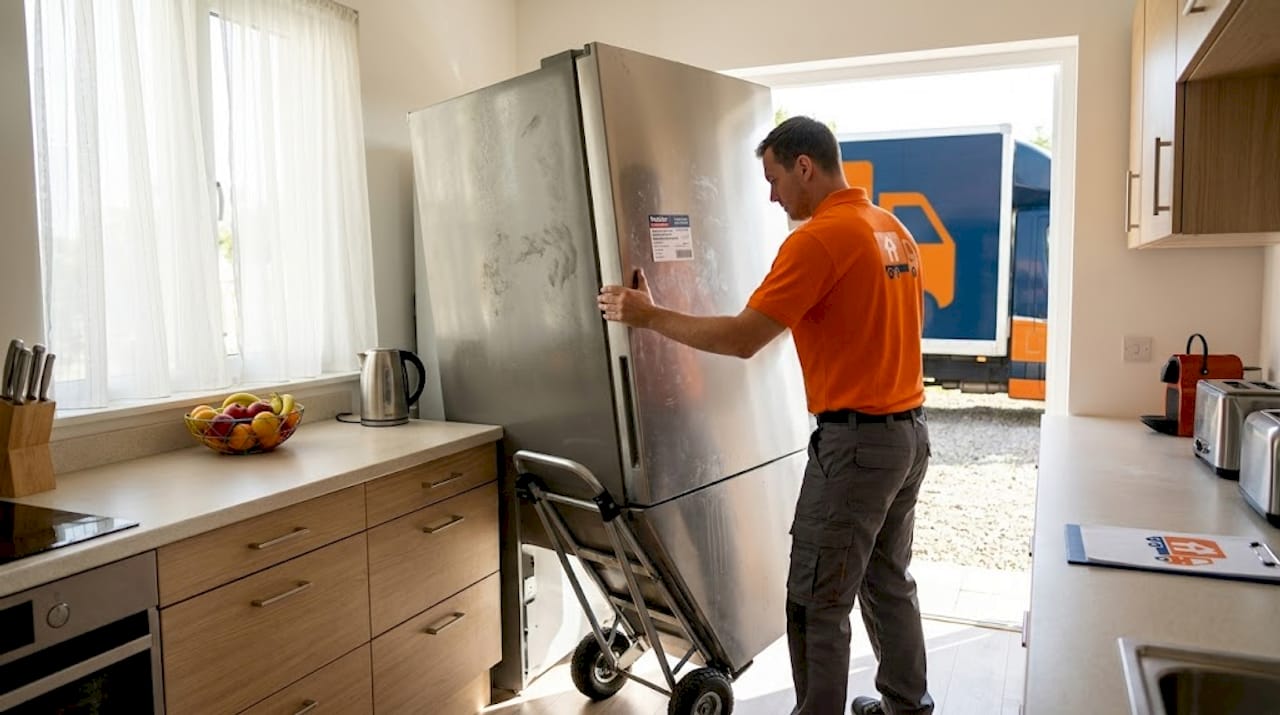
The important detail: this service is almost never free and almost never available without a purchase. Haul-away fees typically range between $25 and $50 depending on appliance size, and the service is tied directly to a qualifying new appliance delivery.
What you get with retailer haul-away:
- One-stop convenience: Delivery and removal happen in a single visit.
- Responsible handling: Reputable retailers send old appliances to certified recyclers rather than landfills.
- Trade-in credit: Some retailers offer modest trade-in value toward your new purchase.
- No heavy lifting on your end: The delivery crew handles all the physical work.
The limitations are real, though. If your old appliance is not in the same room as where the new one is being installed, some crews will decline the haul-away. Stairs, tight hallways, and disconnected water lines can also create complications. And if you're not buying anything new, this option simply does not apply to you.
3. Professional junk removal and home appliance pickup services
This is the option that gives you the most control. Junk removal companies provide appliance removal services even without a new purchase, offering convenience not tied to retail transactions. You call, they come, they take it away. That's the whole process.
The best services offer same-day or next-day pickup, upfront pricing before they touch anything, and a team that handles all the heavy lifting. For homeowners dealing with multiple appliances, a full cleanout, or a tight moving timeline, this is usually the fastest path.
Here's what separates a quality provider from a mediocre one:
- Upfront pricing: You should know the cost before they start. Any company that gives you a vague estimate on the phone and then adjusts it on-site is a red flag.
- Eco-friendly disposal: Professional junk removal companies offer upfront pricing, handle heavy lifting, and recycle responsibly rather than dumping everything in a landfill.
- Licensing and insurance: Always confirm the company is licensed and insured. If a worker gets hurt on your property with an uninsured crew, that becomes your problem.
- Hazardous component handling: A reputable service knows how to handle appliances with refrigerants, capacitors, and other regulated components safely.
- No purchase required: Unlike retailer haul-away, you can use this service any time, for any reason.
Pro Tip: Before booking, ask the company specifically whether they recycle or donate usable appliances. The best providers will give you a straight answer. If they can't tell you where your appliance goes, that's worth knowing.
4. Certified scrap yards and EPA-certified technicians
Some appliances cannot legally be disposed of through standard channels. Refrigerators, window air conditioners, and older chest freezers all contain refrigerants that fall under EPA regulations. If you try to dispose of these through a regular bulk pickup or drop them at an uncertified facility, you risk fines and environmental harm.
Here's how to handle it correctly:
- Identify whether your appliance contains refrigerants. Refrigerators, freezers, dehumidifiers, and air conditioners almost always do. Washers, dryers, and dishwashers typically do not.
- Find an EPA-certified technician. These are professionals who are licensed to safely recover refrigerants before the appliance is scrapped. Your local HVAC company can often point you in the right direction.
- Contact a certified scrap yard. Once the refrigerant is removed, a scrap yard can reclaim the steel, copper, and aluminum in the unit. Some scrap yards pay you by the pound for the metal.
- Get documentation. Ask for a receipt or certificate confirming proper refrigerant removal. This protects you if questions arise later.
The metal reclamation side of this process is genuinely worth considering. A large refrigerator contains significant amounts of steel and copper. Scrap metal prices fluctuate, but you may walk away with $10 to $30 for the materials alone. It's not a windfall, but it beats paying for disposal.
5. Donating working appliances to charities
If your appliance still works, throwing it away is the worst possible choice. Nonprofits accept working refrigerators, washers, and stoves, helping communities while keeping usable items out of landfills. Organizations like Habitat for Humanity ReStores, local shelters, and community assistance programs actively look for functional appliances.
The donation route has two real advantages. First, you may qualify for a tax deduction based on the fair market value of the appliance. Second, many charities offer free pickup for large items, which means you pay nothing and someone in need gets a working appliance.
The limitation is obvious: the appliance has to work. A refrigerator that barely cools or a washer that leaks will be turned down. Call ahead, describe the appliance honestly, and confirm pickup availability before counting on this option.
6. Comparing your appliance removal options
Choosing the right method depends on your specific situation. Here's a side-by-side look at how the main options stack up:
| Method | Cost | Convenience | Eco-friendly | Requires purchase? |
|---|---|---|---|---|
| Municipal bulk pickup | Free to low | Moderate (scheduled) | Yes | No |
| Retailer haul-away | $25 to $50 | High (same-day delivery) | Yes | Yes |
| Professional junk removal | $75 to $150+ | Very high (same-day) | Yes (if reputable) | No |
| Certified scrap yard | Free or paid | Low (requires prep) | Yes | No |
| Charity donation | Free | Moderate | Yes | No |
Quick situational guide:
- Buying a new appliance anyway? Use retailer haul-away. It's the simplest path.
- On a tight timeline or moving? Book a professional junk removal service.
- Appliance still works? Donate it and potentially get a tax write-off.
- Have a refrigerator or AC unit? Confirm certified refrigerant handling regardless of which method you choose.
- Want to save money and have time to wait? Check your city's bulk pickup schedule first.
My honest take on appliance removal after years in this space
I've watched homeowners make the same mistakes over and over, and the most common one is treating appliance removal as an afterthought. You plan the renovation, you order the new unit, and then you realize nobody has a plan for the 250-pound dryer sitting in the hallway.
The second biggest mistake is assuming all disposal options are equally responsible. I've seen appliances get hauled away by unlicensed crews and end up in illegal dump sites. That's not just bad for the environment. It can create legal exposure for the homeowner if the appliance is traced back to you.
What I've learned is that the extra five minutes spent vetting a removal company pays off every time. Ask where the appliance goes. Ask if they're insured. Ask if they handle refrigerants correctly. A company that answers those questions confidently is worth paying a little more for.
The rebate angle is also something most homeowners completely miss. Old appliances quietly consume energy at inefficient rates, and energy programs offer real cash incentives to get them out of homes. Combining a municipal recycling pickup with an energy rebate can mean you get paid to solve a problem you thought would cost you money.
— Charles
How Bookjunkaway makes appliance removal easy in Tampa Bay
If you're in the Tampa Bay area and want the fastest, most straightforward path to getting rid of an old appliance, Bookjunkaway is built for exactly that situation.
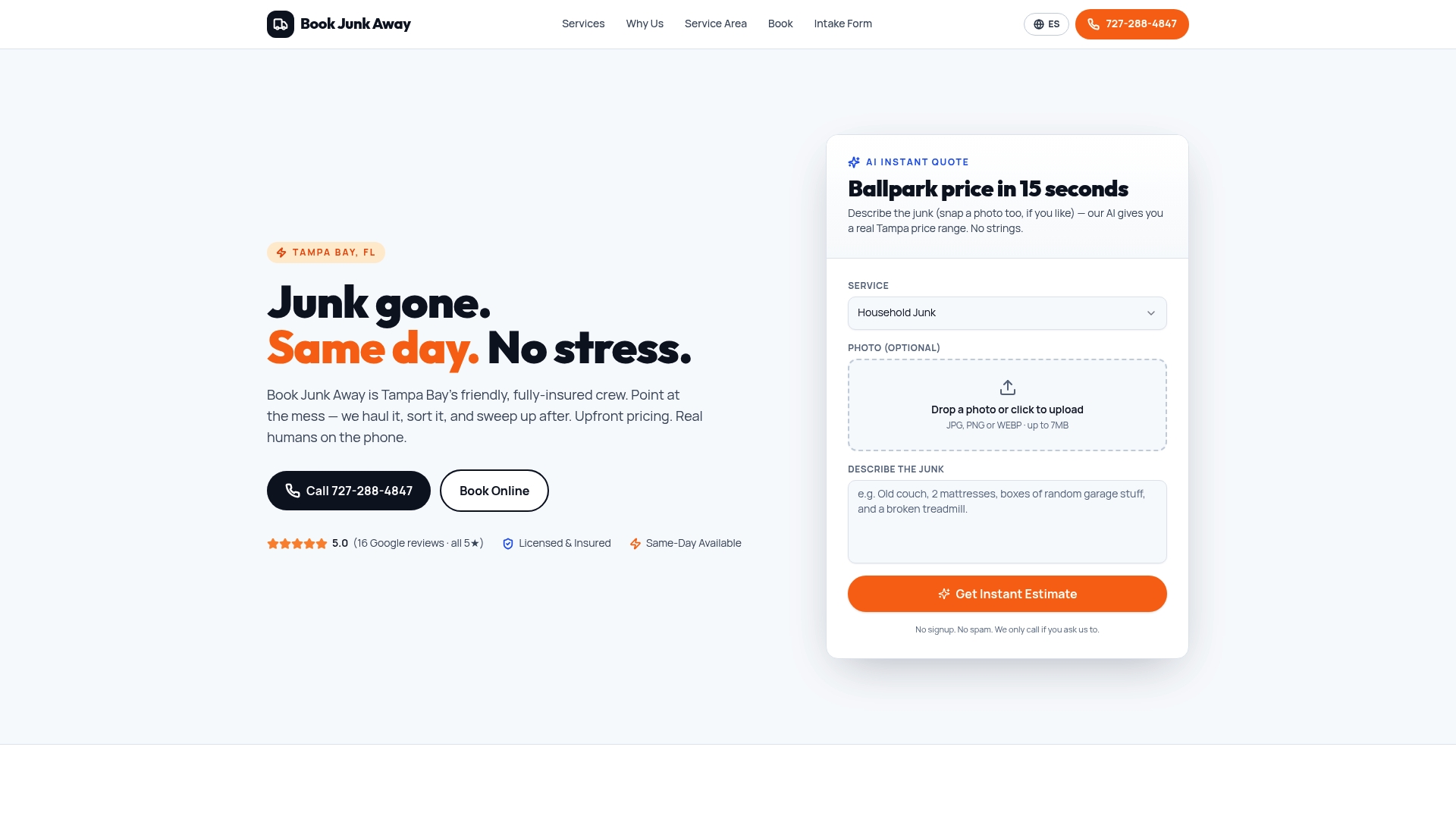
Bookjunkaway offers same-day appliance removal across Tampa Bay with upfront pricing you see before anyone lifts a finger. Their AI-driven quote system lets you submit a photo or description of your appliance and get an instant estimate, so there are no surprises on pickup day. The team is fully licensed, insured, and committed to eco-friendly disposal, donating and recycling usable items rather than sending everything to a landfill. Whether you're in Brandon, Largo, or anywhere across the Tampa Bay region, Bookjunkaway's local team handles the heavy lifting so you don't have to.
FAQ
Can I put an old appliance out with regular trash?
Most municipalities do not allow large appliances to be disposed of with regular household trash. Appliances with refrigerants, like refrigerators and air conditioners, require certified handling and cannot be placed at the curb for standard pickup.
How do I dispose of a refrigerator legally?
Refrigerators must have their refrigerants removed by an EPA-certified technician before disposal. After that, you can use a municipal recycling program, a certified scrap yard, or a professional junk removal service that handles refrigerants correctly.
What appliance removal options are free for homeowners?
Municipal bulk pickup programs are often free or low cost. Charity donation with free pickup is another no-cost option for working appliances. Some energy rebate programs also pay you for recycling qualifying units, effectively making removal free or profitable.
How should I prepare an appliance before removal?
Proper preparation includes unplugging the appliance at least 24 hours before pickup, cleaning it out, removing shelves, taping doors shut, and disconnecting any water lines. This makes the removal process faster and safer for everyone involved.
Are professional junk removal services worth the cost?
For homeowners with tight timelines, multiple appliances, or limited mobility, professional home appliance pickup services are absolutely worth it. The cost is typically $75 to $150 per appliance, and you get same-day pickup, no heavy lifting, and guaranteed responsible disposal.